

PU conveyor rollers, constructed by encasing steel rollers in polyurethane, are highly favoured for their high load-bearing capacity, chemical resistance, and quiet operation.
As a specialized conveyor roller, polyurethane conveyor rollers (also known as PU coated rollers) have unique applications for seamless integration across industries. They are suitable for conveyor systems handling heavy materials, offering high load capacity, smooth operation, and customizable options to meet various industrial needs, especially as reliable light-duty rollers for diverse scenarios.
Let’s explore their core value and how GCS’s solutions can benefit your business.
Key Benefits of PU Rollers
Superior wear & cut resistance for extended service life and reduced replacement costs
Ultra-quiet operation with low vibration to minimize factory noise pollution
Non-marking surface + exceptional impact protection to prevent product damage during conveying
Wide temperature range compatibility for stable performance across diverse working environments
High load capacity & excellent load-bearing elasticity to support heavy material handling with smooth operation
Customizable options + efficient power transmission to meet the unique needs of various industrial systems
Light-Duty PU Roller Specifications
|
Model |
Diameter |
Load Capacity |
Hardness |
Speed |
Noise Level |
Tube Material |
Bearing Type |
Polyurethane Coating Thickness |
Shaft Diameter |
Standard Length Range |
|
LR25 |
25mm |
5-8kg |
Shore A 70-85 |
≤80m/min |
<45dB |
Carbon steel/SS304 |
6001ZZ |
2mm/3mm/5mm |
8mm |
100mm-1500mm |
|
LR38 |
38mm |
8-12kg |
Shore A 80-90 |
≤80m/min |
<45dB |
Carbon steel/Galvanized steel/SS304 |
6001ZZ |
2mm/3mm/5mm |
10mm |
100mm-1500mm |
|
LR50 |
50mm |
12-25kg |
Shore A 70-85 |
≤120m/min |
<45dB |
Carbon steel/SS304 |
6001ZZ |
2mm/3mm/5mm |
12mm |
100mm-1500mm |

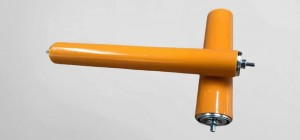
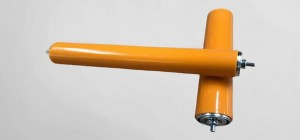
⌀25mm Model - 5-8kg Capacity
Shore A Hardness: 70-85 (customizable)
Noise Level: < 45dB at 60m/min
Tube Material: Carbon steel / SS304
Speed Rating: Up to 80m/min
⌀38mm Model - 8-12kg Capacity
Shore A Hardness: 80-90 (customizable)
Noise Level: < 45dB at 60m/min
Tube Material: Carbon steel / Galvanized steel / SS304
Speed Rating: Up to 80m/min
⌀50mm Model - 12-25kg Capacity
Shore A Hardness: 70-85 (customizable)
Noise Level: < 45dB at 60m/min
Tube Material: Carbon steel / SS304
Speed Rating: Up to 120m/min
Industry Applications
-
E-commerce Parcel Sorting
Handle packages from 100x100mm to 400x400mm. Zero damage to poly mailers and fragile items. Quiet operation ideal for 24/7 fulfillment centers.
Speed: Up to 120m/min Package weight: 0.5-5kg Typical spacing: 37.5mm pitch
-
Electronic Assembly Lines
Equipped with anti-static PU coating (10⁶-10⁹ Ω) to protect sensitive components. The smooth surface prevents scratching, and it’s compatible with ESD-safe environments. The hardness is Shore A 80-90, with a stainless steel 304 core and custom colors for line identification.
-
Food & Beverage Packaging
Offers FDA-grade polyurethane (compliant with FDA 21 CFR 177.2600) that is resistant to oils and cleaning agents. A blue color option is available for foreign material detection, and it can work in a temperature range of -10°C to 60°C with a washdown design. [Get Instant Quote]Food & Beverage Packaging
-
Warehouse Automation
Perfect for gravity conveyors and zero-pressure accumulation. Low rolling resistance reduces energy costs. Long lifespan minimizes maintenance downtime.
Maintenance-free bearings 5-year warranty Compatible with major conveyor brands
PU Rollers vs Rubber Rollers
• Service Life: PU rollers have superior wear resistance, lasting 2-3 times longer than rubber rollers in most industrial environments.
• Noise Level: PU rollers operate at <45dB, while rubber rollers typically produce 10-15dB more noise.
• Cost-Effectiveness: Although PU rollers have a higher initial cost, their long service life and low replacement frequency result in lower overall costs.
• Load Capacity: PU rollers offer higher load-bearing elasticity, making them more suitable for heavy material handling compared to rubber rollers.
Anti-static PU Rollers for Electronics
Anti-static PU rollers are specially designed for electronic assembly lines and ESD-sensitive environments. With a surface resistance of 10⁶-10⁹ Ω, they effectively dissipate static electricity to protect sensitive electronic components.
Why Choose PU Conveyor Rollers from GCS?
As a factory-direct manufacturer (not a trader) with in-house production and QC systems, we’re dedicated to reliable bulk customization and long-term partnerships. Our core advantages:
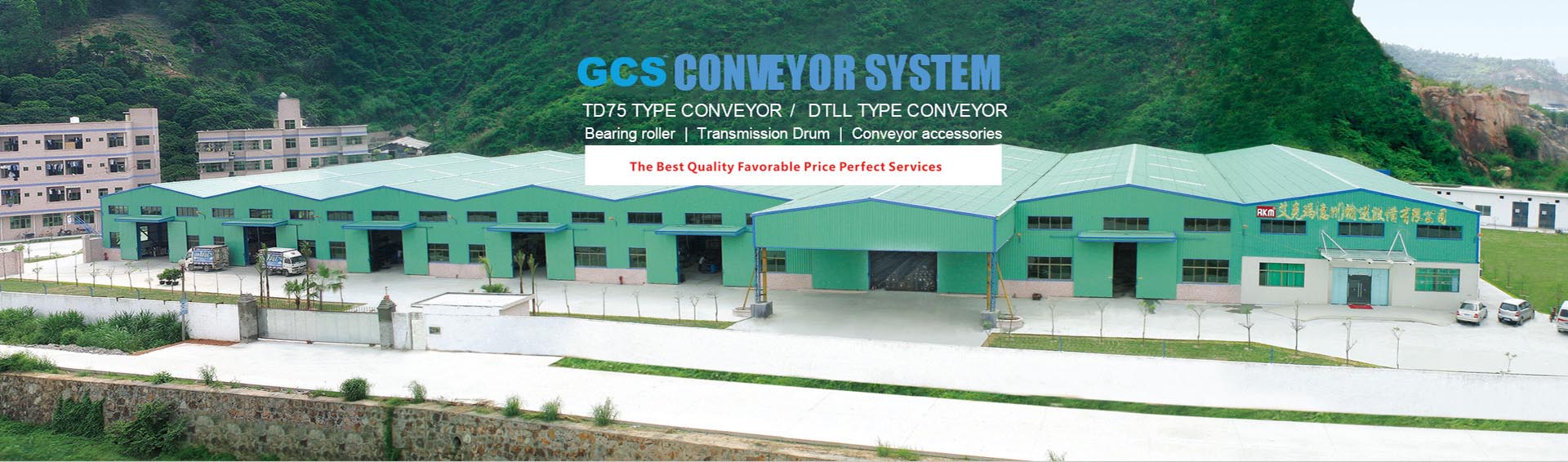
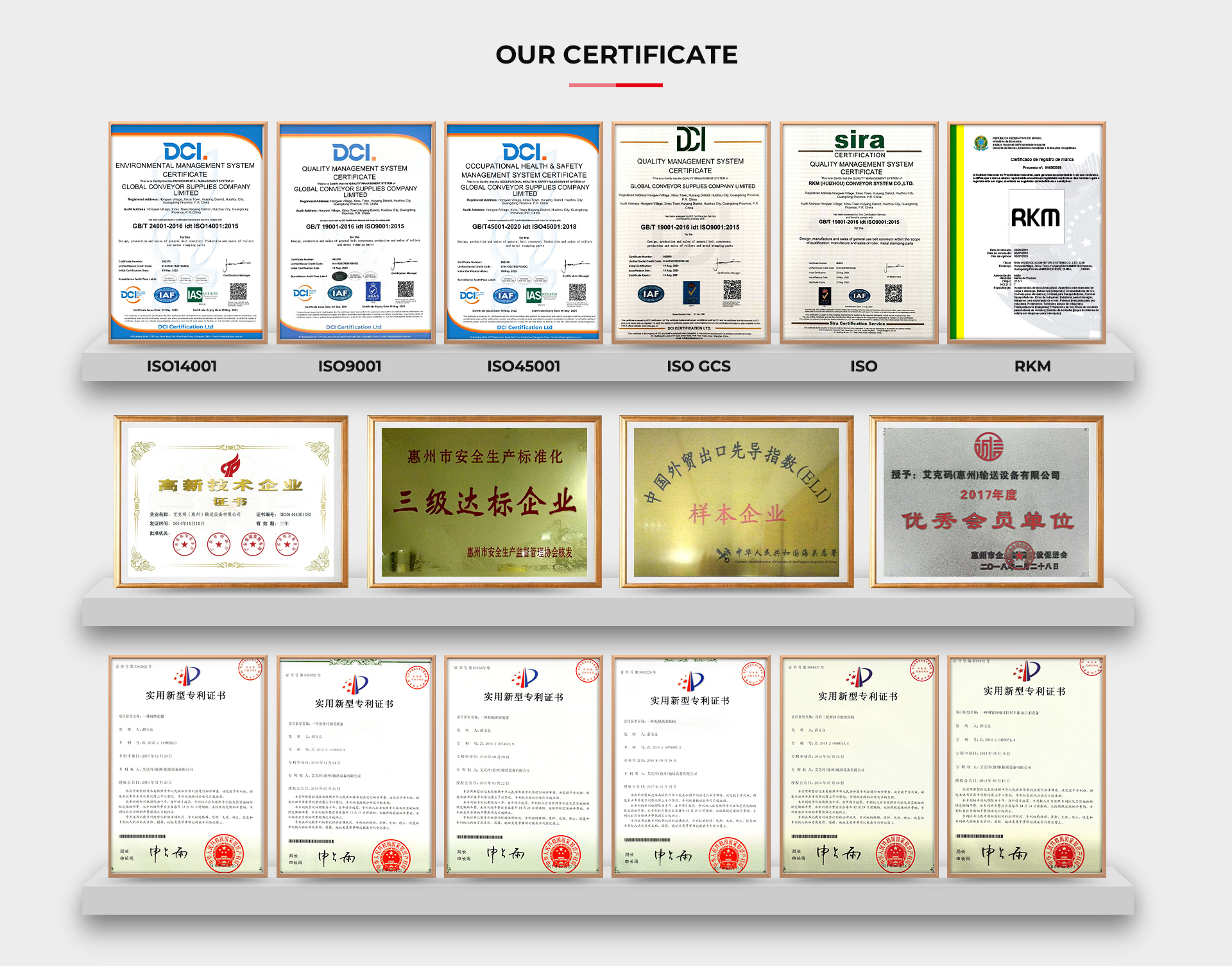
• ISO 9001/14001/45001 certified, with 30+ years of export experience and a 20,000㎡ factory
• Full customization (size, material, axle end, packaging, marking, etc.) for diverse industry needs
• 5–7 day fast delivery, with pricing and delivery advantages for large orders (ideal for system integrators)
• Trusted by SF Express, JD.com, and 500+ global automation projects
Customer Reviews
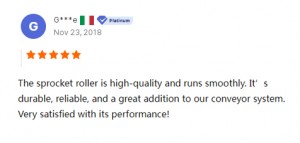
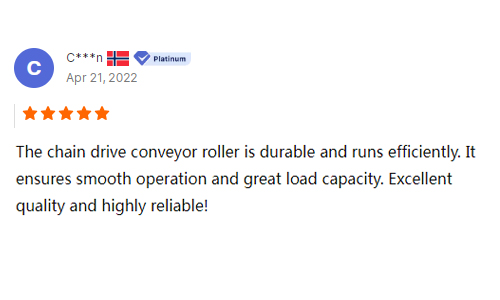

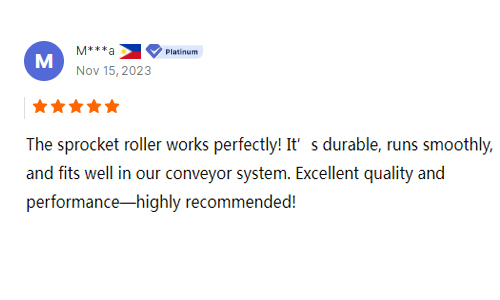

GCS Certified
Frequently Asked Questions - GCS Light-Duty PU Rollers
1. What is the load capacity of GCS light-duty PU rollers?
GCS light-duty PU rollers support 5-20 kg per roller depending on diameter: ⌀25mm handles 5-8kg, ⌀38mm handles 8-12kg, and ⌀50mm handles 12-20kg. For stable transport, ensure your workpiece contacts at least three rollers simultaneously.
2.What is the minimum roller spacing for light-duty applications?
For ⌀25mm rollers, use 37.5mm pitch. For ⌀38mm rollers, use 57mm pitch. For ⌀50mm rollers, use 75mm pitch. This ensures 3-roller contact for items as small as 113mm in length.
3. Is anti-static PU coating available for electronic applications?
Yes. GCS offers anti-static PU rollers with surface resistance of 10⁶-10⁹ Ω. These are ideal for electronic assembly lines and ESD-sensitive environments. Specify "ESD" when requesting a quote.
Frequently asked questions about conveyors roller
A conveyor roller is a line in which multiple rollers are installed for the purpose of transporting goods in a factory, etc., and the rollers rotate to transport the goods. They are also called roller conveyors.
They are available for light to heavy loads and can be selected according to the weight of the cargo to be transported.
In most cases, a conveyor roller is a high performance conveyor that is required to be impact and chemical resistant, as well as being able to transport items smoothly and quietly.
Inclining the conveyor allows the conveyed material to run on its own without external drive of the rollers.
Your rollers must fit your system exactly for optimal performance. Some different aspects of each roller include:
Size: Your products and conveyor system size correlate to the roller size. The standard diameter is between 7/8″ to 2-1/2″, and we have custom options available.
Material: We have several options for roller materials, including galvanized steel, raw steel, stainless steel and PVC. We can also add urethane sleeving and lagging.
Bearing: Many bearing options are available, including ABEC precision bearings, Semi-precision bearings and Non-precision bearings, among other options.
Strength: Each of our rollers has a designated load weight specified in the product description. Rolcon provides both lightweight and heavy-duty rollers to match your load sizes.
Conveyor rollers are used as conveyor lines to move loads from one location to another, for example, in a factory.
The conveyor rollers are suitable for conveying objects with relatively flat bottoms, as there may be gaps between the rollers.
Specific materials conveyed include food, newspapers, magazines, small packages, and many others.
The roller does not require power and can be pushed by hand or propelled by itself on an incline.
Conveyor rollers are often used in situations where cost reduction is desired.
A conveyor is defined as a machine that continuously transports a load. There are eight major types, of which belt conveyors and roller conveyors are the most representative.
The difference between belt conveyors and roller conveyors is the shape (material) of the line conveying the cargo.
In the former, a single belt rotates and is transported on it, while in the case of a roller conveyor, multiple rollers rotate.
The type of rollers is selected according to the weight of the cargo to be conveyed. For light loads, the roller dimensions range from 20 mm to 40 mm, and for heavy loads up to about 80 mm to 90 mm.
Comparing them in terms of conveying force, belt conveyors are more efficient because the belt makes surface contact with the material to be conveyed, and the force is greater.
Roller conveyors, on the other hand, have a smaller contact area with the rollers, resulting in a smaller conveying force.
This makes it possible to convey by hand or at an incline, and it has the advantage of not requiring a large power supply unit, etc., and can be introduced at a low cost.
A typical 1 3/8” diameter roller has a capacity of 120 lbs. per roller. A 1.9” diameter roller will have an approximate capacity of 250 lbs. per roller. With rollers set on 3” roller centers, there are 4 rollers per foot, so the 1 3/8” rollers would typically carry 480 lbs. per foot. The 1.9” roller is a heavy duty roller that handles approximately 1,040 lbs. per foot. The capacity rating can also vary based on how the section is supported.
Conveyor Rollers Replacement That’s Customized to Your Requirements
In addition to a large number of standard sized rollers, we are also able to craft individual roller solutions for niche applications. If you have a challenging system that needs rollers that are made to your particular dimensions or that need to be able to cope with a particularly tough environment, we can normally come up with a suitable answer. Our company will always work with customers to find an option that not only delivers the required objectives, but which is also cost-effective and able to be implemented with minimal disruption. We provide rollers to a wide range of industries, including companies involved in ship building, chemical processing, food & beverage production, transport of hazardous or corrosive substances and many more.
Related reading
Roller Conveyor
Chain Gravity Roller
Curve Roller
Share our interesting knowledge and stories on social media
Post time: Jan-16-2026